Skip to content
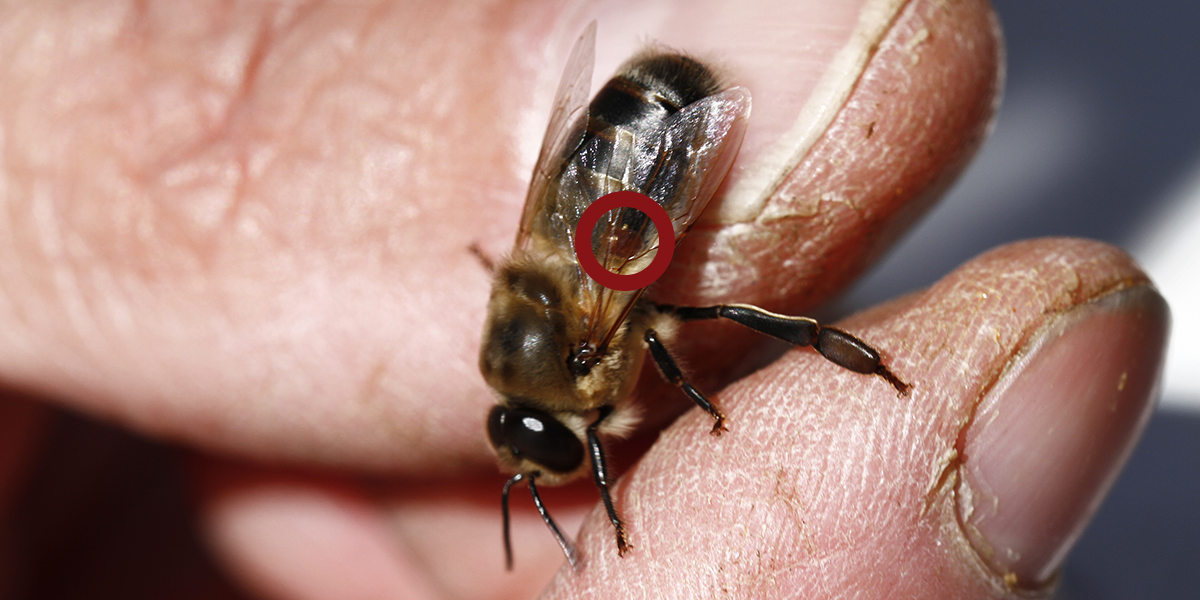
A Varroa mite (indicated with red circle) can be seen under the wing of this bee from Miller Honey Farms in Gackle, N.D. Beekeepers say the mites cause many problems for them. Researchers from the University of Minnesota say that poor nutrition resulting from habitat loss may be making the mite situation worse. Photo by Lindsay Anderson/Tri-County News

Bee losses that threaten industry partly related to change in Dakota landscape

What is causing the significant increase in bee die-offs in the past decade?

Recent research suggests there’s no single cause, instead pointing to several factors that combine or interact to weaken or kill bees. But according to an ongoing study in Stutsman County, N.D., at least one of those causes is tied to changes in the Dakota land where those bees buzz away their summers: The conversion of grassland to cropland is affecting bees’ diets, which makes them less healthy.
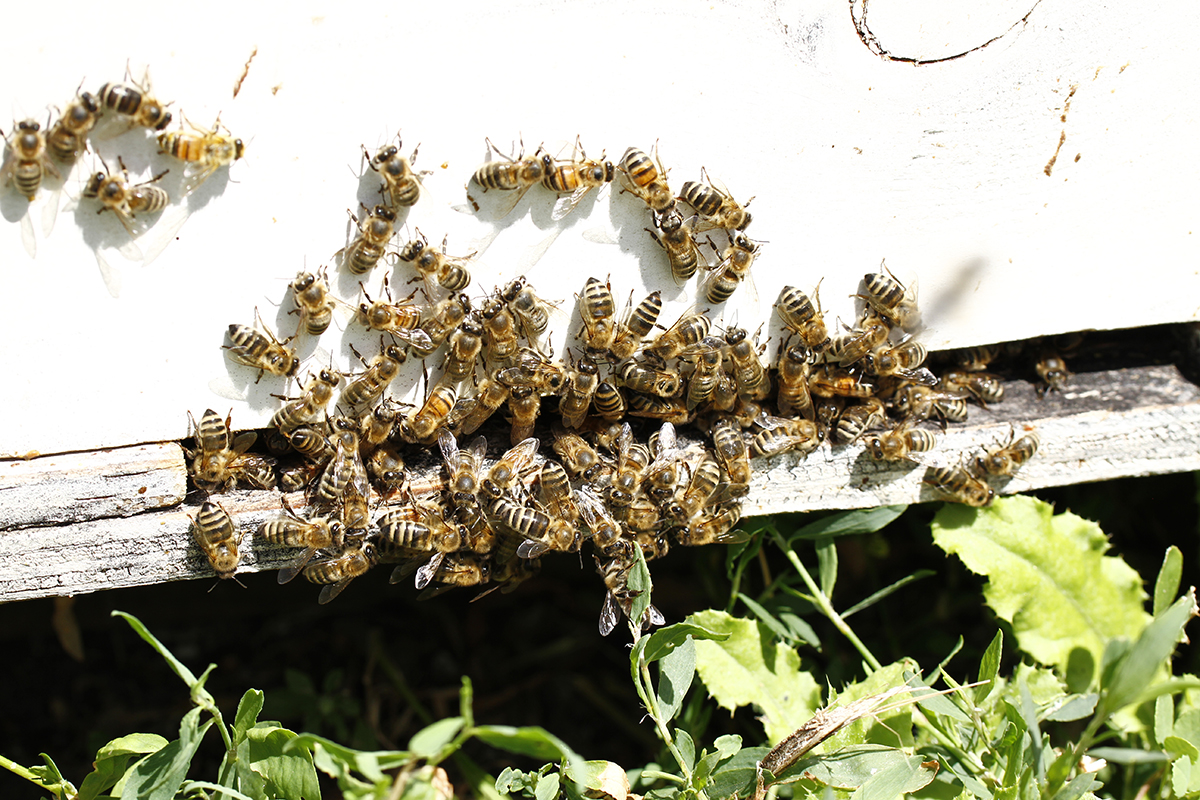
Bees in a hive at Miller Honey Farm in Gackle, N.D. Photo by Melody Owen/Tri-County News

Dakota bees that pollinate crops nationwide are struggling

Area beekeepers are suffering from bee die-offs in numbers they call unsustainable, which threatens not only their livelihood but could also affect hundreds of crops that depend on pollination by bees. The first in a two-part series.

Waubay apiarist as busy as his bees

When he isn’t keeping busy as a county commissioner or working with his construction equipment, Waubay resident Gary Block is the travel agent for a semiload of “busy bees” who pollinate crops all over the country on a year-round basis.